
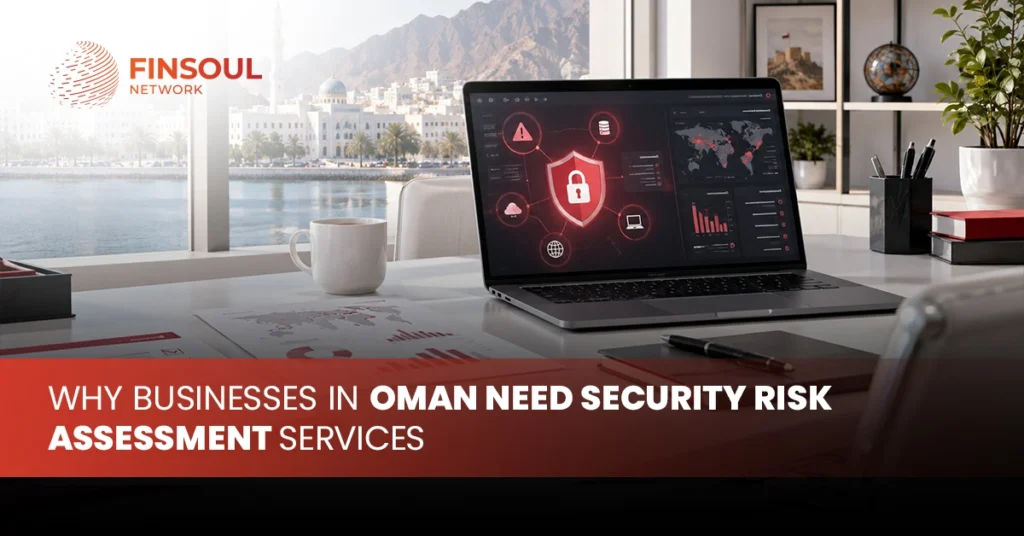
Business security in Oman is no longer just about guards, CCTV cameras or locked doors. Companies now face risks that touch people, property, technology and daily operations all at once.
An organisation can be exposed through unauthorised access, theft, workplace incidents, fire, insider activity, cyberattacks, data exposure, weak access controls, supplier problems and sudden operational disruptions. Any one of these can cause financial loss, legal exposure or damage to reputation if it is not identified early.
This is where a security risk assessment becomes useful. It helps a business find its weak points before they turn into real incidents, financial losses or regulatory problems. Oman businesses also operate inside workplace safety rules and a growing cybersecurity assessment ecosystem, so structured risk identification has become part of normal business planning rather than an optional extra. Many companies now bring in a firm like ISO Consultancy Oman to walk through this process properly instead of guessing where the gaps are.
What Is a Security Risk Assessment for an Oman Business?
A security risk assessment is a structured way of looking at a business from every angle that could be exposed to harm. It is not a walk-through inspection with a checklist ticked off in ten minutes. The assessment examines several things together:
- Assets and premises – buildings, equipment, stock and physical spaces that could be damaged, stolen or misused.
- People – staff, visitors and contractors who move through the business and could be affected by a security gap.
- Systems and information – IT infrastructure, data and communication tools that carry sensitive company information.
- Processes – daily operations and procedures that could be interrupted by an incident.
- Threats and vulnerabilities – the specific things that could go wrong and the weaknesses that would let them happen.
- Existing controls – what protections are already in place and how strong they actually are.
Which Security Risks Should Oman Businesses Assess?
Security risk covers far more ground than most business owners expect. A proper assessment looks across four broad categories rather than focusing on one alone.
- Unauthorised entry – people entering restricted areas without proper checks or badges.
- Theft and vandalism – loss of stock, equipment or damage to property.
- Weak perimeter control – gaps in fencing, gates or entry points that go unnoticed for months.
- Poor visitor management – guests or delivery staff moving around without supervision.
- Inadequate surveillance – blind spots in camera coverage or footage that is never reviewed.
- Phishing and ransomware – attacks that target staff directly through email or messaging.
- Weak passwords and excessive privileges – access rights that go far beyond what a role actually needs.
- Insecure networks – outdated systems, poor backup practices and unmonitored connections.
- Data leakage – sensitive information leaving the business through careless handling or weak controls.
Why Security Risk Assessment Matters for Businesses in Oman
The value of an assessment comes from what it prevents, not just what it documents. Each of the points below explains a real business outcome rather than a generic benefit.
Preventive security costs far less than responding to a loss that has already happened. Finding a gap on paper is cheaper than discovering it after a break-in or a data breach. An assessment gives management the chance to fix a problem quietly, on their own schedule, rather than reacting under pressure after something has gone wrong. This is the core reason companies like ISO Consultancy Oman are brought in before problems appear, not after. Early identification also protects the company’s reputation, since customers and partners rarely hear about risks that were closed before they became incidents.
How Security Risks Can Affect Different Oman Industries
Risk exposure changes significantly depending on the type of business. A hotel and a factory do not share the same weak points, even if both need a security review.
Manufacturing and industrial companies
Machinery, warehouses and production areas carry both safety and security risk at the same time. Hazardous materials and restricted zones need controlled access, not just general supervision. Employee safety around equipment is closely tied to how well access and procedures are managed. A single supply chain disruption can also stop production for days if there is no backup plan in place.
Hotels and hospitality businesses
Guest safety, room access and visitor management sit at the centre of hotel security. CCTV coverage and employee area controls need to work together with front desk procedures. Emergency response planning is critical given the number of guests on site at any time. Guest information also needs protection, since hospitality businesses hold large amounts of personal data.
Retail and commercial businesses
Shoplifting, cash handling and staff access are the most common exposure points in retail. Customer safety during busy periods adds another layer that pure inventory protection does not cover. Surveillance needs to be paired with clear staff procedures, since cameras alone do not stop loss if nobody is reviewing the footage or acting on what they see.
Construction and contracting companies
Temporary sites bring their own risks, including equipment theft and material storage in areas without permanent security. Worker safety on a live site is a constant concern that changes as the project progresses. Contractor access needs close tracking, since multiple companies are often on site at the same time. Site perimeter security tends to be weaker on temporary projects than at permanent premises.
Offices and professional services
Confidential documents and digital information are the main assets at risk in an office environment. Employee access levels and visitor management both need review, along with laptop and device security. Network security ties everything together, since most office risk today involves information rather than physical assets alone.
What Happens During a Security Risk Assessment?
An assessment follows a logical sequence rather than a random walkthrough. Each step builds on the one before it.
Step 1: Define the assessment scope
The scope might cover one facility, multiple locations, IT infrastructure, specific departments or the entire organisation. Getting this right at the start avoids wasted time later.
Step 2: Identify assets and critical operations
This step maps out what actually needs protection, from physical equipment to critical business processes. Not everything carries the same value, so this step helps set priorities early.
Step 3: Identify threats and vulnerabilities
Common examples include unauthorised access, cyberattack, theft, fire, insider activity, equipment failure and operational disruption. Each one is examined against the assets identified in the previous step.
Step 4: Review existing security controls
This covers access controls, CCTV, alarms, written policies, security personnel, IT controls, backup arrangements and emergency plans. The review shows what is already working and what is only working on paper.
Step 5: Evaluate and rank the risks
Risks are ranked using likelihood and impact, usually sorted into low, medium, high and critical categories. This ranking is what turns a long list of problems into something management can actually act on.
Step 6: Develop corrective actions
The assessment should end with practical recommendations, not just a list of weaknesses. Identifying a problem without a suggested fix leaves the business no better off than before the review started.
What Should a Security Risk Assessment Report Include?
A good report gives management something they can use immediately, not a long document that sits unread. Each section below should appear clearly.
- Executive risk summary – high level findings written for management, not technical staff.
- Identified threats and vulnerabilities – a clear description of each weakness found during the review.
- Risk rating – likelihood, impact and an overall risk level for each item.
- Existing controls – what the company already has in place today.
- Recommended corrective actions – what needs to change, why it matters, the priority level, the responsible department and a suggested timeframe.
- Risk treatment priorities – a clear separation between urgent risks and longer term improvements.
Security Risk Assessment vs Security Audit vs Penetration Testing
These terms are often used interchangeably, but they serve different purposes and should not be confused with one another.
| Assessment | Main Purpose |
| Security Risk Assessment | Identify and prioritise security risks |
| Security Audit | Check compliance and control effectiveness |
| Penetration Testing | Test if technical vulnerabilities can actually be exploited |
| Vulnerability Assessment | Identify technical weaknesses |
| Workplace Safety Assessment | Identify occupational health and safety hazards |
| Business Continuity Assessment | Evaluate the ability to continue critical operations |
When Should an Oman Business Conduct a Security Risk Assessment?
Timing matters more than most owners realise, and waiting for a fixed schedule is not always the right approach.
- Starting a new business or facility – risks should be mapped before operations begin, not after.
- Moving into new premises – a new location brings a completely different set of physical risks.
- After a security incident – a review shows what failed and prevents the same gap from repeating.
- Introducing new technology – new systems often bring new vulnerabilities that were not there before.
- Changing critical business processes – a process change can quietly remove a control that used to work.
- Before pursuing a security certification – an assessment prepares the business for what certification will require.
- After major organisational changes – growth, mergers or restructuring all change the risk profile.
- As part of periodic risk monitoring – ongoing review catches gaps that build up slowly over time.
The right frequency depends on the size of the organisation, its industry, its technology exposure and how quickly it is changing.
How to Choose a Security Risk Assessment Provider in Oman
Choosing a provider is where many businesses make avoidable mistakes. A few practical checks make the decision much easier.
Check the provider’s assessment scope
Confirm the provider actually covers physical security, cybersecurity, risk management, workplace risks and compliance together. A provider that only covers one area will leave large parts of the business unreviewed.
Ask directly what is included before signing anything, since scope is often the source of disappointment later. Providers such as ISO Consultancy Oman are usually upfront about what falls inside and outside a given engagement.
Look for relevant industry experience
A manufacturing facility carries a completely different risk profile from a hotel or a financial services office. Ask for examples of similar work in a similar industry before committing.
Experience in the specific sector usually means faster identification of the risks that matter most, rather than a generic checklist applied to every client.
Check qualifications and recognised frameworks
Look for familiarity with frameworks such as ISO 27001, ISO 31000, recognised cybersecurity standards and applicable Omani requirements. This gives some assurance that the methodology behind the assessment is sound.
Ask how risks will be prioritised
A good provider separates critical weaknesses from minor observations instead of treating every finding as equally urgent. If everything on the report is marked high priority, the ranking has not actually been done properly.
Check what the final report contains
Ask for a risk register, risk ratings, supporting evidence, clear recommendations, priority actions and a management summary. A vague report with no structure is difficult to act on later.
Confirm whether follow-up support is available
The real value of an assessment comes from closing the gaps it identifies, not from the report alone. Ask if the provider offers support during implementation or only hands over a document and moves on.
What Businesses Should Do After a Security Risk Assessment
The assessment is the starting point for risk management, not the end of it. What happens next determines whether the work was worth doing.
- Review high risk findings first – give urgent items immediate attention before anything else.
- Assign responsibility – every action needs a named owner, not a general instruction to the team.
- Set deadlines – open ended actions rarely get completed on time.
- Implement corrective controls – put the recommended fixes into place as planned.
- Document completed actions – keep a record for future reference and audits.
- Test whether controls work – confirm the fix actually solves the problem it was meant to solve.
- Reassess remaining risks – some risks will need a second look after initial changes are made.
- Update the risk register – keep the document current as the business changes over time.
Common Security Risk Assessment Mistakes Businesses Should Avoid
Some mistakes appear again and again across different businesses, regardless of size or industry.
Assessing only cybersecurity
Security includes physical, human and operational risk as well as technical risk. Focusing only on IT systems leaves large parts of the business completely unreviewed.
Treating every risk as equally important
Risk prioritisation is the entire point of the exercise. A report that lists everything as urgent gives management nothing useful to act on.
Focusing on equipment instead of process
Having CCTV or antivirus software installed does not automatically mean the underlying risk is controlled. Equipment needs to be paired with proper procedures and regular review.
Ignoring employees and contractors
Human behaviour and third party access create some of the largest vulnerabilities in any business. A technically secure system can still be compromised by a careless click or an unmanaged contractor account.
Preparing the report and never implementing it
A report has little value if the recommendations sit unopened after delivery. The real cost of an assessment is wasted if the findings are never acted on.
Waiting until after an incident
Reactive security almost always costs more than preventive risk management. Waiting for a loss before acting removes the entire advantage an assessment was meant to provide.
Protecting an Oman Business Starts With Knowing Its Risks
A business cannot manage risks it has never identified. A structured security risk assessment gives management a clear view of where the business stands today, across people, property, technology and operations.
This clarity supports better investment decisions, stronger controls and faster preparation for incidents before they happen. Working with an experienced partner such as ISO Consultancy Oman turns this process from a paper exercise into a practical plan that management can actually follow through on.
Get in Touch
If your business needs a clear picture of where its security gaps actually sit, this is worth sorting out before it turns into a bigger problem. A short conversation is usually enough to work out what scope of assessment makes sense for your operation.
Reach out by email at info@finsoulnetworkoman.com to speak with the team and get started.
Frequently Asked Questions
Is a security risk assessment mandatory for businesses in Oman?
Requirements depend on the type of risk, the business activity, the premises and the applicable regulatory framework. There is no single blanket rule that forces every Oman business into one generic type of assessment, so it is worth checking what applies to the specific industry and location.
What is included in a business security risk assessment?
A full assessment covers physical premises, employees, systems, information and operational processes together. It ends with a report that ranks risks and recommends practical corrective actions rather than just listing problems.
How often should an Oman business conduct a security risk assessment?
There is no single fixed number that applies to every business. Frequency depends on company size, industry, technology exposure and how quickly the organisation is changing, with major events such as new premises or new technology usually triggering an additional review.
Does a security risk assessment include cybersecurity?
Yes, cybersecurity is one part of a complete assessment alongside physical, workplace and operational risk. A business focused only on IT risk is missing a large part of its actual exposure.
How much does a security risk assessment cost in Oman?
Cost depends on several factors rather than a single fixed price. Business size, number of locations, assessment scope, industry, physical inspection requirements, cybersecurity testing needs, number of systems and reporting requirements all influence the final cost.