
ISO Certification for Automotive Companies in Oman
Automotive companies operating in Oman, whether as vehicle distributors, aftermarket service providers, fleet management operators, spare parts suppliers, or automotive technology providers, face a commercial and regulatory environment that increasingly demands formal quality governance, safety management, and environmental accountability. Achieving ISO certification for automotive companies in Oman demonstrates the operational discipline that fleet operators, government procurement bodies, insurance partners, and international brand principals require before entering supply, service, or distribution agreements.
Finsoul Network Oman provides specialist ISO certification support for automotive sector organisations across Oman, covering vehicle distributors and dealers, authorised service centres, fleet management companies, spare parts distributors, tyre and lubricants suppliers, and automotive technology providers. Our programmes are structured around the specific regulatory obligations and commercial requirements of Oman’s automotive sector, managing the full certification journey from gap assessment and documentation through to internal audit preparation and certification body coordination.
Why Automotive Companies in Oman Need ISO Certification
Oman’s automotive sector operates within a framework of Royal Oman Police vehicle regulations, Ministry of Commerce consumer protection requirements, and the governance expectations of international automotive brand principals that authorise local distributors and service networks. Government fleet procurement frameworks consistently reference ISO 9001 as a supplier quality qualification criterion. International automotive brands applying dealer and service centre standards increasingly require ISO 9001 or IATF 16949 certification as a condition of franchise renewal or authorised service network participation.
ISO certification provides the structured framework that converts these commercial and regulatory demands into auditable management systems. ISO 9001:2015 addresses service quality consistency, customer complaint management, and supplier governance across parts procurement and subcontracted services. ISO 14001:2015 manages the environmental impacts of automotive service operations, including waste oil disposal, solvent management, and emissions from vehicle testing activities. ISO 45001:2018 governs workshop safety across the physical risks inherent in vehicle servicing and heavy commercial vehicle operations. Without expert support, automotive organisations risk compliance systems that satisfy a specific audit but fail to embed into daily service operations. Finsoul Network Oman builds programmes that integrate with service workflows rather than running as parallel documentation exercises.
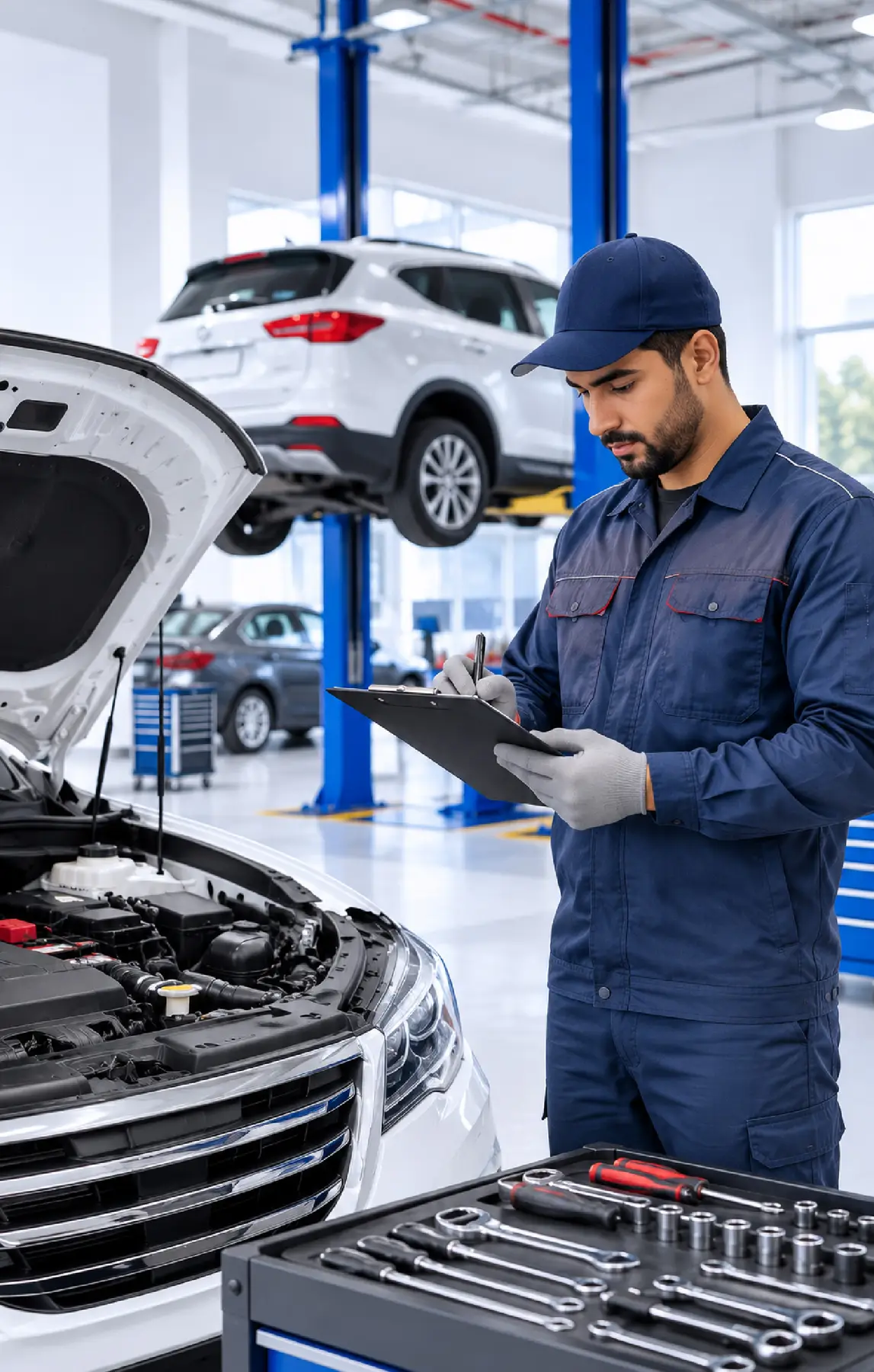
ISO Standards Relevant to Automotive Companies
Automotive sector organisations operate across service delivery, parts supply chain, and customer management environments where quality consistency, safety, and environmental responsibility are simultaneously critical. The following ISO standards address the specific obligations and risk profile of automotive companies in Oman.
ISO 9001:2015 - Quality Management System
ISO 9001 is the foundational certification for automotive companies in Oman. It provides a framework for managing service delivery consistency, parts quality, customer satisfaction measurement, and continual improvement across dealership and aftermarket operations. For companies supplying government fleet programmes or seeking authorised network status from international automotive brands, ISO 9001 is a recognised and frequently mandatory quality credential.
IATF 16949:2016 - Automotive Quality Management System
IATF 16949 extends ISO 9001 with automotive-specific requirements covering production part approval, defect prevention, supply chain quality management, and customer-specific requirements. For automotive parts manufacturers, component suppliers, or companies operating within OEM supply chains, IATF 16949 is the recognised sector-specific quality standard and a prerequisite for formal OEM supplier qualification.
ISO 14001:2015 - Environmental Management System
ISO 14001 governs environmental impact identification, waste management, and regulatory compliance across automotive operations. For service centres and workshops, this covers waste oil collection, solvent and chemical handling, tyre disposal, and vehicle fluid management. Ministry of Environment Climate and Biodiversity regulations apply to automotive service operations handling controlled waste streams, and ISO 14001 provides the management system framework for demonstrating regulatory compliance.
ISO 45001:2018 - Occupational Health and Safety Management System
ISO 45001 addresses hazard identification, risk controls, and incident management across workshop and service centre environments. Automotive workshops involve significant physical risk from vehicle lifting, hydraulic systems, chemical exposure, and heavy commercial vehicle handling. ISO 45001 provides structured safety governance that satisfies Ministry of Manpower obligations and demonstrates safety management to enterprise fleet clients and insurance underwriters.
ISO/IEC 27001:2022 - Information Security Management System
ISO 27001 is increasingly relevant for automotive companies managing connected vehicle data, digital service booking platforms, customer relationship management systems, and fleet telematics data under Oman’s PDPL obligations. Dealerships and fleet operators handling personal data at scale face formal security governance requirements from February 2026 that ISO 27001 directly addresses.
ISO 22301:2019 - Business Continuity Management System
ISO 22301 is relevant for automotive companies providing critical fleet management services to government, logistics operators, or emergency services. Continuity planning for parts supply, service availability, and fleet support operations provides assurance to enterprise clients whose own operations depend on vehicle availability and uptime.
Sector-Specific Compliance for Automotive Companies in Oman
ISO certification for automotive companies must align with the following regulatory frameworks and commercial obligations.
- Royal Oman Police Standards: Roadworthiness, modification approval, and inspections. ISO 9001 supports process control and technical governance.
- MoCIIP Consumer Protection: Covers warranties, spare parts, and service quality. ISO 9001 provides complaint handling and service documentation.
- Environment Waste Obligations: Waste oil, filters, fluids, and tyres must be managed. ISO 14001 ensures compliance with waste regulations.
- International Brand Requirements: Global manufacturers demand ISO 9001 for franchise, repairer status, and audits. Certification proves quality governance.
Schedule a consultation with our ISO experts in Oman and take the first step toward ISO certification. We provide expert guidance, personalized support, and reliable consulting to help your business achieve compliance, improve efficiency, and meet international standards with confidence.
ISO Certification Practices for the Automotive Sector in Oman
Automotive companies in Oman typically follow three implementation patterns shaped by their business model, client base, and brand principal obligations.
Brand Principal Audit and Franchise-Driven
The most common implementation trigger for vehicle distributors and authorised service centres is a brand principal audit requirement or franchise renewal condition that specifies ISO 9001 certification. These programmes are structured around the specific requirements of the brand principal’s dealer standards and audit framework, with Finsoul Network Oman mapping certification documentation directly to the brand audit checklist.
Government Fleet Procurement-Driven
Fleet management companies and authorised service providers pursuing government fleet contracts initiate ISO 9001 and ISO 45001 certification in response to tender qualification requirements from Ministry procurement offices and government-linked fleet operators. Implementation timelines are aligned to procurement submission windows, with documentation structured to address tender evaluation criteria.
Environmental and Safety Compliance-Driven
Automotive service centres and workshop operators pursue ISO 14001 and ISO 45001 certification in response to Ministry of Environment permit requirements, Ministry of Manpower inspection findings, or enterprise client due diligence requirements from fleet operators applying supplier safety standards. These programmes prioritise operational control documentation, waste management records, and safety risk assessment evidence.
Key Benefits of ISO Certification for Automotive Companies in Oman
ISO certification helps automotive companies demonstrate service quality, meet brand and regulatory obligations, and access government and enterprise market opportunities.
Brand Principal Compliance
ISO 9001 certification provides the documented quality governance evidence required by international automotive brand principals during dealer network audits and franchise renewal assessments.
Government Fleet Contract Access
ISO 9001 and ISO 45001 meet qualification requirements for government fleet procurement programmes, opening access to Ministry and government-linked fleet service contracts that uncertified providers cannot access.
Customer Satisfaction and Retention
ISO 9001 implementation embeds structured customer feedback, complaint resolution, and service consistency processes that drive measurable improvement in customer satisfaction and retention across dealership and aftermarket operations.
Environmental Regulatory Compliance
ISO 14001 provides a management system framework for controlling waste streams, managing chemical handling, and demonstrating active compliance with Ministry of Environment obligations across automotive service operations.
Workshop Safety Governance
ISO 45001 provides structured safety risk management across workshop environments, reducing workplace incidents, supporting Ministry of Manpower compliance, and demonstrating safety governance to enterprise fleet clients and insurance underwriters.
Challenges Automotive Companies Face During ISO Certification in Oman
Automotive organisations face implementation challenges that reflect the service delivery pace, multi-site structures, and mixed workforce profiles of dealership and aftermarket operations. Our consultants help clients address these directly:
- Building supplier evaluation and parts inspection records that satisfy ISO 9001 clause 8.4 requirements across parts supply chains that span multiple international OEM and aftermarket sources
- Developing ISO 14001 environmental aspects registers that capture all controlled waste streams generated by automotive service operations and map them to permit conditions and regulatory requirements
- Building ISO 45001 hazard identification documentation that covers all workshop tasks, including vehicle lifting, wheel alignment, brake system servicing, and high-voltage systems in electric and hybrid vehicle servicing
- Preparing internal audit programmes that service quality managers can sustain alongside daily workshop supervision and customer-facing responsibilities
- Managing multi-branch certification scope where individual service centres operate under varying brand standards and service capability levels
- Maintaining post-certification governance through technician turnover, model range changes, and the introduction of new vehicle technologies including electric and hybrid platforms
Opportunities ISO Certification Unlocks for Automotive Companies in Oman
ISO certification creates measurable commercial and strategic opportunities for automotive companies operating across Oman’s vehicle sales, service, and fleet sectors.
ISO 9001 supports applications for wider service coverage, multi‑brand approvals, and franchise accreditation.
Logistics and fleet operators require ISO 9001 and ISO 45001. Certification enables access to high‑value service agreements.
ISO 9001 and ISO 45001 can integrate EV protocols, positioning centres as credible providers ahead of fleet electrification.
ISO 9001 supports inclusion in approved repairer panels, generating consistent accident repair referrals.
Certification is recognised across GCC frameworks, supporting expansion of service networks and distribution arrangements.
Recommended Standard Combinations for Automotive Companies in Oman
For vehicle distributors and authorised service centres seeking brand principal compliance and government fleet procurement access, the core combination is ISO 9001:2015 and ISO 45001:2018. ISO 9001 addresses service quality governance and brand audit requirements, while ISO 45001 covers workshop safety obligations and enterprise fleet client qualification criteria. Integrated implementation is more cost-efficient since both standards share documentation structures and management review processes.
Automotive service centres with significant environmental obligations arising from waste oil volumes, solvent use, or Ministry of Environment permit conditions should add ISO 14001:2015 to create a fully integrated quality, safety, and environment management system. The integrated approach eliminates duplicated documentation across the three standards and reduces total audit burden across annual surveillance cycles.
For automotive parts manufacturers or suppliers operating within OEM supply chains, the recommended approach is to implement ISO 9001 first to establish the quality management foundation, then progress to IATF 16949:2016. IATF 16949 builds on ISO 9001 with automotive-specific requirements for production part approval, defect prevention, and customer-specific quality requirements that OEM qualification frameworks mandate.
Why Automotive Companies Choose Finsoul Network Oman
Automotive organisations in Oman choose Finsoul Network Oman because we understand the service delivery environment of dealership and aftermarket operations and design programmes that work within operational realities rather than around them.
- Automotive Sector Knowledge: Programmes designed around brand audits, fleet qualification, and Ministry of Environment obligations, not generic templates.
- Integrated Systems: ISO 9001, 14001, and 45001 implemented as one system, reducing costs compared to separate programmes.
- Workshop & Dealership Experience: Consultants with hands‑on experience across distributors, service centres, and fleet operators in Oman and the GCC.
- Fixed-Scope Engagements: Clear costs, timelines, and deliverables agreed upfront, removing uncertainty for service teams.
- Bilingual Communication: Arabic and English support ensure smooth communication with auditors, ministries, and certification bodies.
Whether your organisation is preparing for a brand principal audit, pursuing government fleet procurement qualification, managing environmental permit obligations across service facilities, or building governance credibility ahead of fleet service contract growth, the time to begin is now. Oman’s automotive sector governance expectations are rising alongside the expansion of government fleet electrification programmes and the tightening of brand principal network standards.
Our consultants will design a programme covering gap assessment, documentation, internal audit preparation, and post-certification surveillance support on a timeline that accommodates your service operations schedule.
Frequently Asked Questions
Which ISO standard is most important for vehicle dealers and service centres in Oman?
ISO 9001:2015 is the most widely required standard, addressing service quality governance, customer satisfaction, and brand principal audit compliance. ISO 45001:2018 is equally important for workshop safety governance, and ISO 14001:2015 is required for service facilities with significant environmental obligations from waste oil and chemical handling.
What is the difference between ISO 9001 and IATF 16949 for automotive companies?
ISO 9001 is a general quality management standard applicable across all sectors. IATF 16949 is the automotive-specific extension that incorporates OEM supply chain requirements, production part approval processes, and defect prevention obligations. Vehicle distributors and service centres typically require ISO 9001, while parts manufacturers and OEM suppliers require IATF 16949.
How long does ISO 9001 certification take for an automotive dealership?
Most automotive dealerships and service centres achieve ISO 9001 certification within 14 to 20 weeks with structured consultant support. Existing documented service procedures and brand principal compliance records can shorten the process considerably.
Can ISO 9001, ISO 14001, and ISO 45001 be certified together for an automotive service centre?
Yes. Integrated implementation of all three standards as a combined management system is more cost-efficient than sequential certification and is the approach Finsoul Network Oman recommends for automotive service facilities with quality, environmental, and safety governance obligations.
Does ISO 45001 cover electric vehicle servicing risks?
ISO 45001 provides the framework for identifying and controlling hazards across all workshop activities, including high-voltage systems associated with electric and hybrid vehicle servicing. Our automotive programmes incorporate EV-specific hazard controls as part of the ISO 45001 implementation where clients are already servicing or preparing to service electric vehicles.