
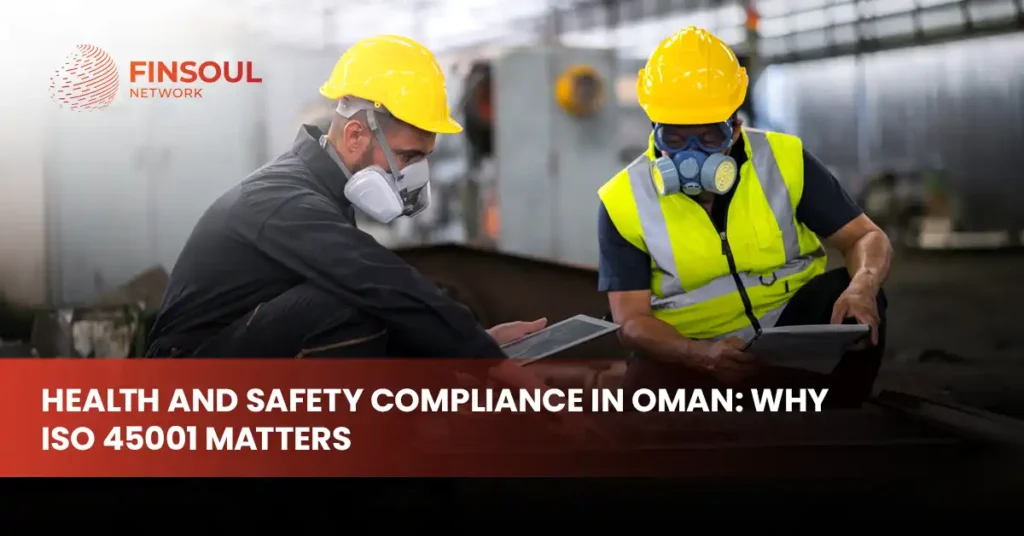
Workplace health and safety is no longer a compliance checkbox for businesses in Oman. It is a strategic priority that affects operational continuity, employee retention, regulatory standing, and the ability to win contracts in sectors where safety credentials are scrutinised before agreements are signed.
As Oman’s economy diversifies and its workforce grows across construction, manufacturing, oil and gas, logistics, and healthcare, the demand for structured, demonstrable safety management is increasing. ISO 45001 provides the internationally recognised framework that allows businesses to meet that demand while building a genuinely safer working environment. ISO Consultancy Oman explains what the standard involves, why it matters in Oman’s business landscape in 2026, and how organisations can implement it effectively.
Understanding Health and Safety Compliance in Oman
Oman’s regulatory framework for occupational health and safety establishes obligations that employers and employees must meet, regardless of whether they pursue ISO certification. Businesses should comply with applicable Omani occupational health and safety legislation as a legal obligation, and should verify current regulatory requirements with qualified advisers given the evolving nature of the regulatory environment.
Employer Responsibilities
Employers in Oman are responsible for providing safe working conditions, identifying and controlling workplace hazards, providing appropriate equipment and training, and reporting workplace incidents to the relevant authorities as required by applicable regulations.
Employee Responsibilities
Employees share responsibility for health and safety by following established safety procedures, using protective equipment correctly, reporting hazards and near-misses, and participating in the safety management processes their employer establishes.
Regulatory Compliance
Sector-specific regulations govern health and safety in industries including construction, oil and gas, and healthcare. Businesses operating in these sectors face additional compliance obligations beyond general labour law requirements and should maintain current awareness of the rules applicable to their activity.
Why Compliance Matters
Non-compliance with health and safety regulations exposes businesses to regulatory penalties, operational shutdowns, civil liability for workplace injuries, and reputational damage that affects customer relationships and the ability to participate in tenders. The financial and commercial consequences of a serious workplace incident consistently exceed the cost of the safety investment that would have prevented it.
Why ISO 45001 Matters for Businesses in Oman
ISO 45001 matters because legal compliance alone is not sufficient to build the kind of safety culture and performance that protects workers, sustains operations, and satisfies the expectations of major clients and government procurement processes.
Creates a Structured Safety Management System
ISO 45001 replaces ad hoc safety arrangements with a documented, systematic framework that assigns responsibilities clearly, establishes consistent processes, and creates accountability for safety performance across the organisation.
Reduces Workplace Accidents
A properly implemented management system identifies hazards and assesses risks before incidents occur, enabling businesses to implement controls that reduce the frequency and severity of workplace injuries and illnesses.
Identifies and Controls Risks
The standard’s hazard identification and risk assessment requirements create a disciplined process for reviewing working environments, activities, and equipment regularly, ensuring that emerging risks are identified and managed rather than overlooked.
Strengthens Legal and Regulatory Compliance
ISO 45001 requires organisations to identify and comply with applicable legal and regulatory requirements, creating a formal mechanism for staying current with obligations and demonstrating compliance to regulators and clients.
Improves Employee Wellbeing
Workers who operate in environments with structured safety management, clear procedures, and actively managed hazards experience fewer injuries and report higher levels of confidence in their employer’s commitment to their welfare.
Builds Customer and Stakeholder Confidence
ISO 45001 certification provides independent evidence that a business manages health and safety to an internationally recognised standard, supporting client due diligence processes and strengthening relationships with insurers, investors, and regulators.
Supports Business Continuity
Workplace incidents disrupt operations, cause equipment damage, trigger regulatory investigations, and result in lost productivity. A management system that prevents incidents protects operational continuity in ways that reactive safety management cannot.
Key Requirements of ISO 45001
The requirements below are summarised in business-friendly terms to support planning and decision-making. Certification requires meeting the full requirements of the standard as published.
- Leadership and commitment: Senior management must visibly lead the health and safety management system, demonstrating personal commitment rather than delegating safety entirely to a compliance function
- Hazard identification: The organisation must establish systematic processes for identifying all workplace hazards across its activities, locations, and working arrangements, including hazards introduced by changes in operations
- Risk assessment: Identified hazards must be assessed to determine the level of risk they present, with the assessment informing decisions about the controls required to reduce risk to acceptable levels
- Worker participation: ISO 45001 places strong emphasis on involving workers in hazard identification, risk assessment, and the development of safety controls, recognising that those closest to operational risks have the most relevant knowledge
- Competence and training: All workers must be competent for the health and safety aspects of their roles, with training provided, documented, and verified as effective rather than simply delivered
- Operational controls: Controls must be implemented to eliminate hazards or reduce risks, including physical controls, procedural controls, and personal protective equipment as appropriate to the risk level
Industries in Oman That Benefit Most from ISO 45001
While ISO 45001 is applicable across all sectors, certain industries face elevated health and safety risks that make the standard’s structured management approach particularly valuable. The following sectors represent the most significant areas of occupational health and safety exposure in Oman.
Construction
Construction sites present some of the highest concentrations of workplace hazards, including working at height, heavy equipment operation, excavation, and exposure to hazardous materials. ISO 45001 provides the systematic risk management approach that construction businesses need to protect workers and satisfy the safety requirements of major project clients.
Manufacturing
Manufacturing environments combine machinery hazards, chemical exposure, repetitive work injuries, and complex operational processes that require structured hazard identification and risk control across multiple work areas simultaneously.
Oil and Gas
The oil and gas sector operates in environments where the consequences of safety failures are potentially severe, including fires, explosions, toxic substance exposure, and remote location incidents. ISO 45001 certification is frequently a prerequisite for operating within major oil and gas supply chains in Oman.
Logistics
Warehouse operations, vehicle movements, manual handling, and loading and unloading activities create consistent injury risks that structured safety management significantly reduces. Logistics businesses serving major retailers or industrial clients increasingly face certification requirements from their customers.
Healthcare
Clinical environments present biological hazards, sharps injuries, manual handling risks from patient care, and the psychological demands of high-pressure clinical work. ISO 45001 supports healthcare providers in managing these diverse risk categories systematically.
Hospitality
Hotels and food service operations involve kitchen hazards, slip and trip risks, manual handling, and chemical exposure in cleaning operations. For larger hospitality groups, ISO 45001 provides the management structure to maintain consistent safety standards across multiple sites.
Warehousing
Racking systems, forklift operations, goods receiving, and order fulfilment activities create injury risks that require systematic management rather than informal arrangements. ISO 45001 provides the framework for consistent risk control across warehousing operations of any scale.
Utilities
Electrical hazards, working in confined spaces, and exposure to pressurised systems make utilities operations among the highest-risk environments for workplace injury. Structured safety management is essential for protecting workers and maintaining regulatory compliance in this sector.
ISO 45001 vs Legal Health and Safety Compliance
Understanding how ISO 45001 relates to legal compliance helps businesses make informed decisions about the level of safety management investment that is right for them. The two are complementary rather than competing, with certification building on the foundation of legal compliance rather than replacing it.
| Area | Legal Compliance | ISO 45001 |
| Purpose | Meet minimum regulatory requirements | Build a comprehensive safety management system |
| Mandatory or voluntary | Mandatory | Voluntary certification |
| Risk management | Reactive and prescriptive | Proactive and systematic |
| Continuous improvement | Not required | Formally required |
| Documentation | Varies by regulation | Comprehensive documentation required |
| Internal audits | Not typically required | Mandatory |
| Certification | No certificate issued | Third-party accredited certificate |
ISO 45001 provides a structured management framework that helps organisations manage health and safety more effectively than legal compliance alone requires. Businesses that implement the standard typically find that it makes regulatory compliance easier to achieve and demonstrate, rather than creating additional obligations on top of existing legal requirements.
Benefits of ISO 45001 Beyond Compliance
Businesses that implement the standard genuinely, rather than treating it as a documentation exercise, consistently report improvements across multiple areas of performance.
- Fewer workplace incidents: Systematic hazard identification and risk control reduce the frequency of injuries and near-misses, protecting workers and reducing the disruption caused by incidents
- Reduced operational disruptions: Fewer incidents means fewer unplanned shutdowns, investigations, and operational delays that affect productivity and customer commitments
- Lower business risks: Reduced incident frequency decreases insurance costs, regulatory exposure, and the legal liability associated with workplace injuries
- Improved employee engagement: Workers who see genuine management commitment to their safety report higher levels of engagement, lower absenteeism, and stronger loyalty to their employer
- Better operational efficiency: The process discipline required by ISO 45001 often surfaces operational inefficiencies that have safety implications, and addressing them improves both safety and productivity simultaneously
Common Challenges During ISO 45001 Implementation
Understanding where ISO 45001 implementations most commonly run into difficulty helps organisations plan mitigation strategies before they are needed.
- Limited management commitment: Safety management systems without genuine leadership engagement fail to embed because workers take their cues from the behaviour of senior management rather than from documented policies
- Poor employee engagement: Workers who are not involved in hazard identification and risk assessment provide less accurate risk information and are less likely to follow procedures they had no part in developing
- Weak documentation: Management systems without adequate written procedures and records cannot demonstrate compliance during certification audits, regardless of how well safety is actually managed in practice
- Inadequate risk assessments: Superficial risk assessments that do not reflect the actual hazards workers face provide a false sense of security and fail the scrutiny of an experienced auditor
- Lack of training: Untrained workers cannot follow procedures they do not understand, and untrained managers cannot identify hazards they have not been taught to recognise
- Resistance to change: Businesses with established informal safety cultures sometimes face resistance to the documentation and process disciplines that ISO 45001 introduces, requiring active change management
- Failure to monitor performance: Management systems that are not regularly reviewed against measurable performance objectives stagnate rather than improve, undermining the continual improvement requirement
Measuring Health and Safety Performance
Health and safety performance measurement is an area where many businesses focus only on lagging indicators such as incident counts, missing the opportunity to monitor leading indicators that predict future safety performance before incidents occur.
- Incident rates: The frequency of workplace injuries and illnesses per defined unit of exposure, tracking changes in safety performance over time
- Near-miss reporting: The volume of near-miss incidents reported by workers, which functions as a leading indicator of incident risk when combined with quality follow-up
- Lost Time Injury Frequency: The number of injuries resulting in lost working time per million hours worked, a widely used benchmark for comparing performance across periods and organisations
- Training completion: The percentage of workers who have completed required safety training within defined timeframes, indicating the effectiveness of the competence management system
- Corrective action closure: The proportion of identified nonconformities and corrective actions closed within their target dates, reflecting the organisation’s discipline in addressing known safety issues
- Internal audit results: The number and severity of nonconformities identified during internal audits, tracking improvement in management system compliance over time
Common Mistakes Businesses Make
The most damaging mistakes in ISO 45001 implementation are not technical failures but cultural and governance ones. They reflect how the standard is approached rather than any lack of understanding of its requirements.
- Treating ISO 45001 as a paperwork exercise: Businesses that focus on producing documentation rather than improving safety performance achieve certification but not the operational benefits the standard is designed to deliver
- Focusing only on certification: Treating the certification audit as the end of the process rather than the beginning of a continual improvement cycle undermines the long-term value of the management system
- Ignoring worker consultation: Implementing safety procedures without meaningful involvement of the workers they affect produces procedures that do not reflect operational reality and are not followed consistently
- Failing to update risk assessments: Risk assessments that are completed once and then filed without review quickly become outdated as operations, equipment, and working arrangements change
- Weak leadership involvement: Delegating health and safety management entirely to a safety officer without visible senior management engagement signals to the workforce that safety is a compliance formality rather than a genuine priority
- Delaying corrective actions: Identifying hazards and nonconformities without addressing them promptly creates a pattern of unresolved risk that auditors identify quickly and that undermines the integrity of the management system
ISO 45001 Health & Safety Advisory
Strengthen workplace safety, meet Omani compliance requirements, and build stakeholder confidence with ISO Consultancy Oman. Our experts guide you through ISO 45001 implementation, certification, and ongoing safety management.
Email: info@finsoulnetwork.com
Final Thoughts
Effective workplace health and safety in Oman is achieved through the combination of legal compliance, visible leadership commitment, genuine worker participation, and a structured approach to continual improvement. Meeting the legal minimum is necessary but not sufficient for businesses that want to protect their workers genuinely, win safety-conscious clients, and build the operational resilience that serious safety management provides.
ISO 45001 offers a practical, internationally recognised framework for achieving all of these outcomes. For businesses in Oman operating in high-risk sectors or seeking to access major commercial and government procurement opportunities, the standard is an investment that delivers measurable returns in reduced incidents, stronger compliance, and a more confident, engaged workforce.
Frequently Asked Questions
What is ISO 45001?
The international standard for Occupational Health and Safety Management Systems, providing a framework for systematically managing workplace health and safety risks and improving safety performance.
Is ISO 45001 mandatory in Oman?
ISO 45001 certification is voluntary. However, compliance with Omani occupational health and safety legislation is mandatory, and many clients and procurement processes require ISO 45001 as a condition of doing business.
How does ISO 45001 improve workplace safety?
By creating systematic processes for hazard identification, risk assessment, worker participation, and continual improvement, the standard reduces the frequency and severity of workplace incidents.
Which industries benefit most from ISO 45001?
Construction, oil and gas, manufacturing, logistics, healthcare, and facility management face the highest occupational health and safety risks and gain the most significant benefit from the standard’s structured management approach.
How long does implementation take?
Typically three to nine months, depending on the size of the organisation, the complexity of its operations, and the maturity of existing safety management practices.